

Photobiomodulation
Photobiomodulation Therapy for Dry AMD
The First and Only FDA-Authorized Treatment for Early to Intermediate Dry Age-Related Macular Degeneration
Missouri Retina Consultants, PC is now offering Valeda Photobiomodulation Therapy, an FDA-authorized, non-invasive ophthalmic light treatment designed to slow the progression of dry age related macular degeneration. This treatment is a significant advancement in the field of retina, as the first treatment aiming to improve visual acuity in patients with early to intermediate stage dry AMD.
By stimulating mitochondria in the retina, the treatment boosts metabolic function, reduces inflammation, and may help stabilize and even enhance vision, reducing the risk of further vision loss and disease progression.
Dry Age-Related Macular Degeneration
AMD is a progressive disease of the retina, the part of the eye that detects visual signals and sends them to the brain. It is the leading cause of vision loss in people over 65, and there is no cure.
There are two forms of AMD:
- The dry form accounts for 90% of AMD cases
- The wet form accounts for 10% of AMD cases
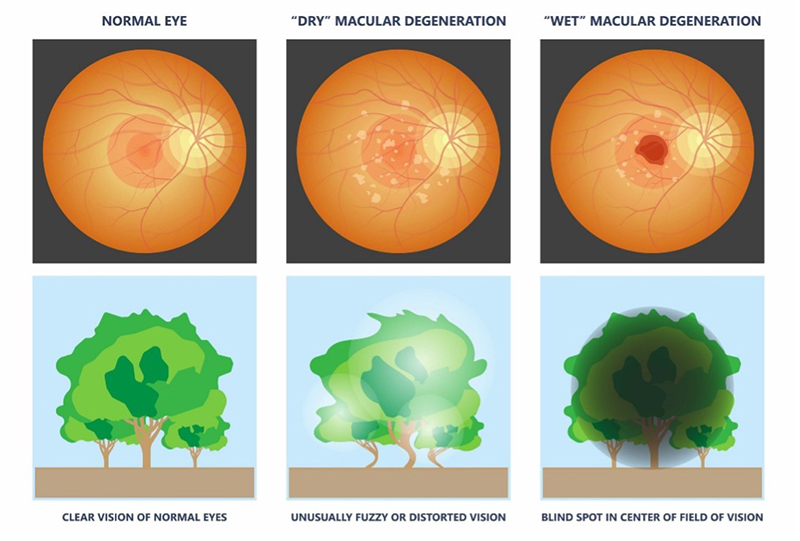
Symptoms of dry AMD may include:
- Blurry or fuzzy vision
- Straight lines appear wavy or bent
- Reduced intensity/brightness of colors
- Trouble adapting to low light
- Loss of central vision, which is necessary for driving, reading, recognizing faces and performing close-up work
Early treatment can make a difference
There is no cure for dry AMD. It is important to diagnose and treat AMD early. Once more significant cellular damage occurs, the central macular cells can atrophy (geographic atrophy) leading to permanent visual loss. Valeda PBM can be used in the earlier stages to better maintain and possibly improve vision.
How Does Photobiomodulation Work?
Photobiomodulation (PBM) involves the use of multiwavelength light therapy directed to macular cells. Retinal cells have some of the highest energy demands in the human body and rely heavily on mitochondria to function. As we age, mitochondrial cells undergo structural and functional decline. PBM stimulates mitochondria thereby promoting healthy cell function while reducing oxidative stress and cellular degradation.
The LIGHTSITE Phase III trial was conducted over 24 months, investigating 148 eyes from 100 participants treated with either PBM or a placebo (sham) treatment. More than 60% of PBM-treated patients experienced improvement of >1 line of vision at about 2 years. In contrast, the placebo group showed little improvement.
While Valeda is not a cure, it is the first FDA-authorized and noninvasive treatment for dry AMD that is aimed at improving vision, although the degree of improvement for each individual patient is not known.
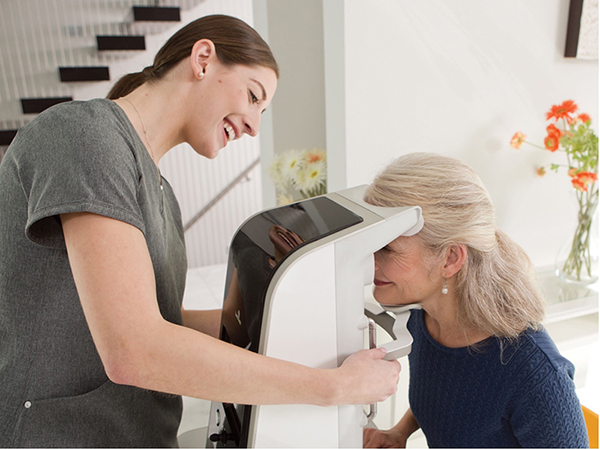
Preparing for Your Valeda Treatment
The treatments are performed at our Columbia office. No special preparation is needed before treatment. There is no dilation, no eye drops, drugs, or needles used in the treatment. You will need to remove glasses or contact lenses.
During Your Valeda Treatment
You will be seated comfortably in front of Valeda and guided through each step of the treatment. The active treatment time is less than 5 minutes per eye per session.
You will receive 9 treatments over 3 to 5 weeks during each series. Typically, a series is repeated every 4 months. A retinal evaluation will be performed after each 4-month series.
After Your Valeda Treatment
Due to the exposure to bright lights, you may experience an afterimage following treatment. This is known as photostress. Normal photostress recovery time is approximately 15-30 seconds. There is no downtime, and you will be able to resume normal activities.
Valeda Safety
The Valeda Light Delivery System technology delivered to the retina is generally safe with minimal side effects. Studies report no damage to the eye or its photoreceptors. Some people may experience mild discomfort, ocular strain or irritation, or temporary visual changes during or after treatment, but these symptoms are rare and usually subside quickly. And while research is ongoing, long-term effects of PBM on the retina are still being investigated.
Valeda Indications for Use
The Valeda Light Delivery System is intended to provide improved visual acuity in patients with best-corrected visual acuity of 20/32 through 20/70 and who have dry age-related macular degeneration (AMD) characterized by:
- The presence of at least 3 medium drusen (> 63 μm and ≤ 125 μm in diameter), or large drusen (> 125 μm in diameter), or non-central geographic atrophy, AND
- The absence of neovascular maculopathy or center-involving geographic atrophy
Contraindications
As a precaution, patients should not be treated with Valeda if they have any known photosensitivity to yellow or red light or near-infrared radiation, or history of light activated central nervous system disorders (e.g., seizure, epilepsy, migraine, etc). Patients should not receive treatment within 30 days of using photosensitizing agents (e.g., topicals, injectables) that are affected by 590, 660, or 850 nm light.